International ID Card Fake: What to Watch For
This guide helps individuals recognize counterfeit international ID cards and avoid potential fraud.
- Posted:
- Last updated: October 8, 2026
- By: Logan Pierce
- 20 minutes
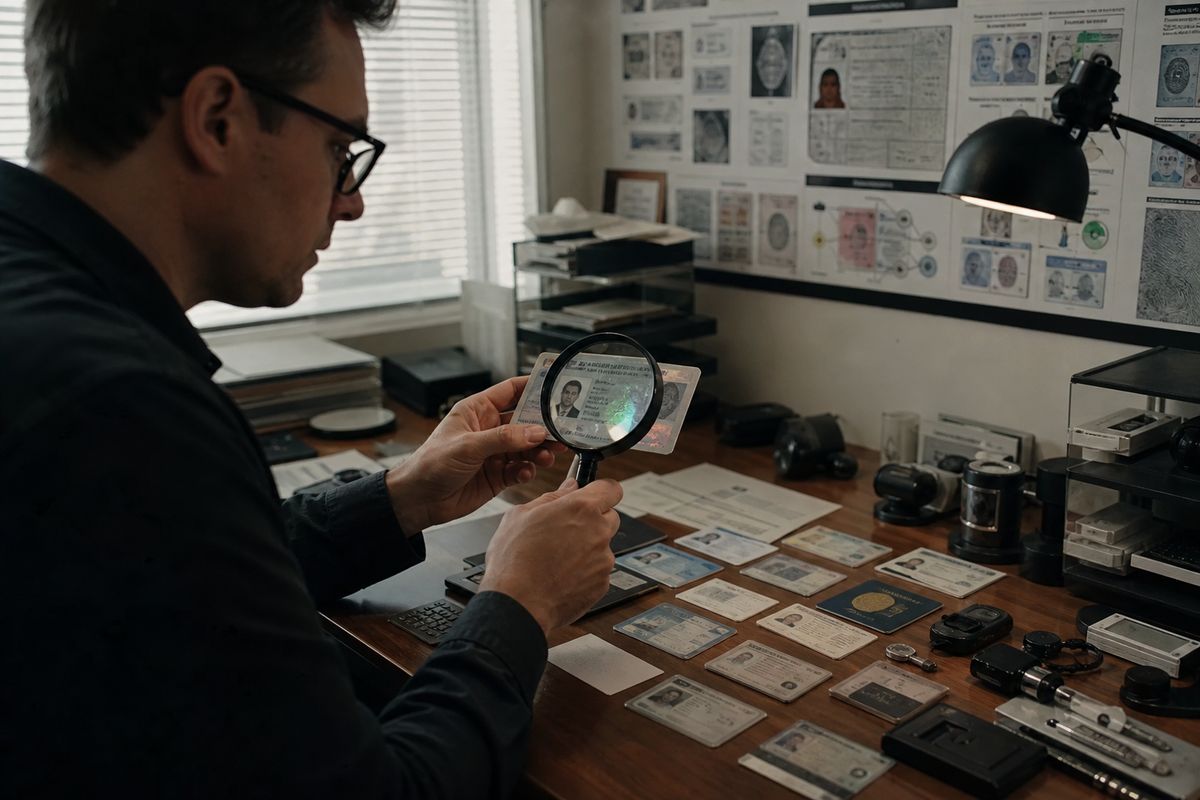
A fake international ID card is a counterfeit or altered identification document created to impersonate legitimate credentials, often sold on dark web marketplaces for an average of £741.95 compared to £1,705.02 for stolen genuine documents1. You can spot fakes by checking for missing security features required by international standards:
What Is a Fake International ID Card?
A fake international ID card is an imitation or altered identification document that mimics legitimate credentials. These counterfeits are often produced with the intent to deceive, leading to fraud and legal issues. Understanding the distinctions between fake and legitimate IDs is crucial for avoiding scams.
Types of Fake ID Cards
Common types of fake international IDs include:
- Counterfeit Government IDs: These documents replicate official government-issued identification. They may include altered details or entirely fabricated identities.
- Novelty Cards: Often used for entertainment, these IDs are not intended for official use but can still cause confusion. They may look similar to real IDs but lack necessary security features.
- Synthetic Identity Documents: These combine real and fake information, creating a new identity that can bypass standard verification processes.
International ID Card Concept
The term 'international ID card' can be misleading. It refers to any identification that might be accepted across borders, but it does not replace country-specific IDs. For instance, a UK passport is a recognized form of ID internationally, while a novelty card might not be accepted anywhere.
Emerging Threats
AI-generated fake IDs are becoming a significant concern. As technology advances, these documents can be created with high precision, making them harder to detect. This evolution in counterfeiting poses an increased risk to individuals and institutions alike.
It's essential to familiarize yourself with the security features of legitimate documents to distinguish them from fakes. Always verify IDs through established methods, such as barcode verification or checking for microprinting.
Common Types of Fake International ID Cards
Identifying fake international ID cards is crucial for avoiding scams. These fakes can be categorized based on their purpose: scam/fraud IDs, novelty IDs, and counterfeit government-issued documents.
Scam/Fraud IDs
Scam IDs are often created to deceive individuals or institutions for financial gain. These may include counterfeit driver's licenses and passports. For instance, a stolen passport can cost approximately £2,372 on the dark web, while a stolen driver's license can sell for around £8444. These documents may contain altered details or entirely fictitious identities.
Novelty/Joke IDs
Novelty IDs are designed for entertainment purposes, not for official use. They can resemble real identification but lack essential security features. While these cards are not intended for fraudulent activities, they can still lead to misunderstandings or legal issues if mistaken for legitimate IDs.
Counterfeit Government-Issued Documents
Counterfeit government IDs are the most concerning type. These documents mimic official identification and may include passports, national ID cards, and student IDs used internationally. An analysis of dark web vendors found that driver's licenses accounted for 493 listings, generating sales of £402,0595. These counterfeit documents can closely replicate security features, making detection challenging.
Dark Web Marketplace Offerings
The dark web marketplace is rife with offerings for fake IDs. Vendors sell PDF templates and physical cards, often at lower prices than genuine documents. The average price for counterfeit identity products is around £1,278.80, compared to £1,705.02 for legitimate documents1.
Commonly faked documents include:
- Driver's licenses
- National ID cards
- Student IDs used internationally
When purchasing or verifying IDs, always check for security features like holograms, UV-reactive ink, microprinting, and RFID chips. These elements are crucial for distinguishing legitimate documents from fakes. Familiarize yourself with these features to avoid falling victim to scams.
Key Security Features of Legitimate ID Cards
Legitimate ID cards contain several key security features designed to prevent counterfeiting. Understanding these elements can help you identify fake international IDs.
Common Security Features
Holograms: These are three-dimensional images that change appearance when viewed from different angles. They are difficult to replicate and serve as a quick verification tool.
UV-Reactive Ink: This ink is invisible under normal light but fluoresces under ultraviolet light. It helps reveal hidden features on the ID, making it harder for counterfeiters to duplicate.
Microprinting: Tiny text that is difficult to reproduce without high-quality printing technology. It often includes security messages or the issuing authority's name.
Laser Engraving: This method creates intricate designs and text directly on the card material. It is challenging to forge and often includes personal data embedded within the card.
Embedded Chips/RFID: Many modern IDs include electronic chips that store personal information. RFID technology allows for quick scanning and can verify the document's authenticity.
Variations by Country
Security features can differ significantly by country. For example, the United States employs a range of features outlined in the 18 U.S. Code § 1028, which mandates strict penalties for producing counterfeit IDs6. The Transportation Security Administration (TSA) utilizes advanced technology to detect fraudulent IDs at airports78.
In the UK, passports must adhere to European Union standards, which require specific paper types and watermarks3. EU passports utilize UV-reactive fibers and security threads that respond under UV light, ensuring a higher level of protection against forgery2.
Layered Security
Legitimate IDs typically incorporate multiple layers of security features. For instance, an EU passport includes UV dull paper, chemical sensitizers, and complex watermarks, enhancing its resistance to counterfeiting2.
When assessing an ID, check for the presence of these layered features. A genuine document will have several security elements working together, making it significantly more difficult to replicate successfully.
Always verify IDs through established methods, such as barcode verification or checking for microprinting. Familiarity with these features will help you avoid falling victim to counterfeit IDs in the dark web marketplace.
How to Spot a Fake International ID Card
Identifying a fake international ID card involves a combination of physical inspection techniques and awareness of visual red flags. Several methods can help you distinguish a counterfeit from a legitimate document.
Physical Inspection Techniques
Check Card Material and Thickness: Genuine IDs are made from specific materials that provide a certain weight and thickness. A fake ID might feel flimsy or overly thick compared to a legitimate card.
Examine Photo Quality and Alignment: The photo on a legitimate ID should be sharp and clearly aligned. Blurry images or misalignment can indicate a counterfeit.
Verify Holograms Under Light: Most authentic IDs feature holograms that change appearance under different lighting. Inspect these closely; if the hologram looks flat or lacks depth, it is likely fake.
Feel for Embossed Text: Genuine IDs often have embossed elements that provide a tactile feel. Counterfeit cards may lack this feature or have poorly executed embossing.
Visual Red Flags
Be mindful of the following visual indicators that may suggest a fake ID:
Mismatched Fonts: Check for consistency in font style and size across the document. Inconsistencies can signal a counterfeit.
Spelling Errors: Simple mistakes in spelling can indicate a fake. Always scrutinize names and locations.
Incorrect Formatting: Genuine IDs follow specific formatting rules. Look for irregularities in layout, such as misplaced text or unusual spacing.
Low-Resolution Images: The quality of images on an ID should be high. Blurry or pixelated images point to a counterfeit.
Behavioral Indicators
When someone presents an ID, their behavior can also provide clues about its authenticity. Pay attention to:
Nervousness or Evasiveness: If the person seems anxious or avoids eye contact, it may indicate they are aware of the ID's questionable legitimacy.
Inconsistent Information: Ask questions that require them to provide details matching the ID. Any discrepancies can suggest the ID is fake.
Reluctance to Allow Inspection: If a person hesitates to allow you to inspect their ID closely, this could be a sign that they are using a counterfeit.
By employing these techniques and being aware of potential red flags, you can better protect yourself against scams involving fake international ID cards. Always verify IDs through established methods, such as barcode verification or examining security features, to ensure their legitimacy.
Tools and Methods for Verifying ID Authenticity
Verifying the authenticity of an ID card is essential to avoid scams or legal issues. Several manual verification techniques can help you assess whether an ID is genuine.
Manual Verification Techniques
Blacklight/UV Light Inspection: Using a blacklight is an effective way to check for UV-reactive ink and other security features. Genuine IDs often have elements that only appear under UV light, such as fibers that fluoresce in different colors. For example, EU passports include colored fibers that are partly visible and partly fluorescent under UV light3.
Magnification for Microprinting: Many legitimate IDs incorporate microprinting, which consists of tiny text that is difficult to replicate. Using a magnifying glass can help you spot these features. If you cannot see the microprinting clearly, the ID may be counterfeit.
ID Scanners and Barcode Verification
ID scanners are widely used by businesses for quick verification. These devices read barcodes and verify information against databases. While scanners enhance accuracy, they may not catch all counterfeit IDs, especially if the document is a high-quality fake.
Limitations of Visual Inspection
Visual inspection alone has limitations. Counterfeiters can produce convincing replicas that may pass initial checks. For example, a counterfeit ID might closely mimic the appearance of a legitimate card but lack essential security features, such as RFID chips or watermarks. It is crucial to combine visual checks with other methods for a more thorough verification process.
Tools Used by TSA and Border Control
The Transportation Security Administration (TSA) employs advanced technology to detect fraudulent IDs. Their Credential Authentication Technology (CAT) scans IDs in real-time, comparing them against stored data to confirm authenticity78. While this technology is not available to the average person, understanding its capabilities can help you appreciate the complexities of ID verification.
In summary, using a combination of manual techniques, ID scanners, and awareness of limitations will significantly enhance your ability to verify ID authenticity. Always remain cautious and informed to avoid falling victim to counterfeit IDs in the dark web marketplace.
Where Fake International IDs Are Created and Sold
Fake international IDs are primarily produced and sold on dark web marketplaces. These platforms host a variety of vendors offering counterfeit identification documents, including passports, driver's licenses, and national ID cards. Vendors often advertise features like 'scannable' IDs or those with 'holograms,' claiming they can pass security checks.
Dark Web Marketplaces
Dark web marketplaces are hubs for illicit goods. Examples include well-known platforms where users can find listings for fake IDs. In total, research identified 1,428 ID document listings, generating approximately $952,731 in sales5. Driver's licenses were the most common, accounting for 493 listings and $402,059 in sales5.
Pricing and Quality Tiers
Pricing for counterfeit IDs varies widely. The average price of fake identity products is around £1,278.80, significantly lower than the £1,705.02 for legitimate documents1. Prices can range from as low as £2 for a simple Photoshop file of a Russian passport to as high as £10,000 for a diplomatic passport. A stolen passport can cost around £2,372, up from £1,399 just months earlier4.
Online Generators and Templates
In addition to physical documents, online generators and PDF templates for creating fake IDs are widely available. These tools often allow users to customize details, making it easy to produce counterfeit documents at home. However, these DIY options may lack the sophisticated security features found in professionally made fakes.
Ecosystem of Fake ID Production
The ecosystem around fake ID production is complex. Some vendors claim their counterfeit products are legitimate documents that can be used for legal entry, often selling at higher prices1. They may also utilize advanced techniques like UV-reactive ink, microprinting, or embedded RFID chips to enhance the realism of their products. However, even with these features, the risk of detection remains high, especially with technologies like the TSA's Credential Authentication Technology (CAT), which can identify fraudulent IDs in real-time78.
When navigating the dark web for ID-related services, it is crucial to remain vigilant. Understanding the landscape of fake ID production helps you identify potential scams and avoid legal troubles associated with counterfeit documents.
Real-World Scenarios: When Fake IDs Are Used
Fake international IDs are commonly used in various scams and illegal activities. Understanding these scenarios can help you recognize potential threats and avoid becoming a victim.
Common Use Cases
Age Verification Bypass: Individuals often use fake IDs to purchase alcohol or enter age-restricted venues. This practice is widespread among minors who want to access adult spaces.
Identity Theft: Counterfeit IDs are frequently employed in identity theft schemes. Criminals use fake documents to impersonate victims, leading to unauthorized access to bank accounts and personal information.
Financial Fraud: Fake IDs can facilitate credit card fraud, enabling criminals to open accounts and make purchases using stolen identities. This type of fraud is prevalent in online transactions where identity verification is lax.
Illegal Immigration: Many individuals seeking to bypass immigration laws use counterfeit IDs to obtain employment or access services. This can lead to serious legal consequences for both the individual and the entities that employ them.
Typical Scam Scenarios
Online Transactions: Scammers often create fake profiles on e-commerce platforms, using counterfeit IDs to gain trust. Victims may unknowingly send money for goods that never arrive.
Rental Fraud: Fake IDs are used by scammers to pose as landlords, collecting deposits for properties that do not exist. Victims may find themselves without a home and out of pocket.
Employment Fraud: Individuals may present fake IDs to secure job positions, leading to legal issues for employers who unknowingly hire them. This can result in fines and loss of reputation for the businesses involved.
Consequences in the r/immigration Context
On forums like r/immigration, users often share experiences regarding the consequences of using fake IDs. For instance, a user reported being detained after presenting a counterfeit ID to a border officer. The penalties for such actions can be severe, including criminal charges and deportation depending on the country’s laws.
Understanding these real-world scenarios can empower you to recognize and avoid situations involving fake IDs. Always verify identities through reliable methods to protect yourself from scams and legal issues.
What to Do If You Encounter a Suspected Fake ID
Encountering a suspected fake ID can be unsettling. It's crucial to handle the situation calmly and safely. Here are immediate steps you should take.
Immediate Steps to Take
Do Not Confront Aggressively: If you suspect an ID is fake, avoid any aggressive confrontation. This can escalate tensions and may put you at risk.
Document Details if Safe: If it's safe to do so, take note of important details. Record the ID number, the person's appearance, and any other relevant information. This can be helpful later.
Refuse the Transaction if You're a Business: If you're in a business setting and suspect the ID is fake, refuse the transaction politely. Explain that you need to verify the ID further before proceeding.
Who to Report to
Local Police: If you believe the ID is part of a larger fraudulent scheme, report it to local law enforcement. They can investigate further.
Relevant Authorities: In some cases, you might also need to report to specific authorities, such as the Department of Motor Vehicles (DMV) or similar organizations in your area.
Platform if Online: If the ID was presented in an online transaction, report it to the platform's customer service. Most platforms take fraud seriously and may take action against the user.
Protecting Yourself from Liability
It's essential to understand the legal implications of handling fake IDs. Under U.S. law, producing or possessing fake identification can lead to severe penalties, including imprisonment of up to 15 years6. Ensure you document your actions and maintain a clear record of any interactions. This can protect you from potential legal issues.
When to Seek Verification from Official Sources
In situations where you have ongoing concerns about an ID's legitimacy, seek verification from official sources. This includes contacting the issuing authority or using verification tools available for businesses. For example, some organizations utilize advanced technologies like TSA's Credential Authentication Technology (CAT) to assess ID authenticity78.
Being proactive and informed can help you navigate the complexities of identifying fake IDs effectively. Always prioritize safety and legality in your actions.
Hardest Fake IDs to Detect and Why
Determining the hardest fake IDs to spot involves understanding various factors. High-quality counterfeits often incorporate genuine security features found in legitimate IDs. These features can include holograms, UV-reactive ink, and microprinting that are difficult to replicate.
High-Quality Counterfeits
Counterfeiters have become increasingly sophisticated. Some high-quality fake IDs may include security elements like RFID chips and embedded barcodes, making them appear nearly identical to genuine documents. These IDs can easily pass initial visual inspections and may even fool some ID scanners.
For example, the use of UV dull paper with controlled fluorescence makes it challenging to discern the difference between a fake and a real ID under standard light conditions2. Many legitimate IDs also contain duotone watermarks and security threads with microprint, which are often absent in lower-quality fakes but can be included in professional-grade counterfeit documents.
AI-Generated Synthetic IDs
Another emerging threat is the use of AI-generated synthetic IDs. These documents are created using advanced algorithms that can produce highly realistic images and text. The sophistication of these synthetic IDs makes them difficult to detect without specialized equipment.
Countries with Less Secure Designs
Some states and countries have less secure ID designs, making it easier for counterfeiters to produce convincing fakes. For instance, IDs from jurisdictions with outdated security features are more susceptible to forgery. The risk increases when the security measures are not regularly updated to meet modern standards.
Need for Specialized Equipment
Detecting professional-grade fakes often requires specialized equipment. Tools like the TSA's Credential Authentication Technology (CAT) enhance the ability to identify fraudulent documents by scanning and comparing IDs against stored databases78. However, this technology isn't accessible to the average person.
In conclusion, the hardest fake IDs to detect are those that closely mimic legitimate documents using advanced security features and technology. Understanding these complexities can help you better identify potential fakes and protect yourself from fraud.
Legitimate vs Fake ID Characteristics Checklist
- Feature
- Hologram Behavior
- Legitimate ID
- Moves and shifts with light
- Fake ID
- Static or poorly printed
- What to Look For
- Check for smooth movement
- Feature
- Card Material
- Legitimate ID
- High-quality plastic or polycarbonate
- Fake ID
- Cheap plastic or paper
- What to Look For
- Feel the card's weight and texture
- Feature
- Font Accuracy
- Legitimate ID
- Consistent and clear font
- Fake ID
- Inconsistent or blurry font
- What to Look For
- Compare with known legitimate IDs
- Feature
- Photo Embedding
- Legitimate ID
- Embedded photo with clear edges
- Fake ID
- Photo glued or poorly integrated
- What to Look For
- Look for seamless integration
- Feature
- UV Features
- Legitimate ID
- Visible under UV light
- Fake ID
- No or weak UV response
- What to Look For
- Use a UV light to check
- Feature
- Watermarks
- Legitimate ID
- Complex, multi-level watermarks
- Fake ID
- Simple or absent watermarks
- What to Look For
- Inspect under light for depth
- Feature
- Microprinting
- Legitimate ID
- Visible under magnification
- Fake ID
- Absent or poorly printed
- What to Look For
- Use a magnifying glass to verify
- Feature
- Security Threads
- Legitimate ID
- Integrated threads with microprint
- Fake ID
- Printed on surface
- What to Look For
- Check for embedded threads
- Feature
- Color Shifts
- Legitimate ID
- Color changes under different angles
- Fake ID
- Flat color without shifts
- What to Look For
- Tilt the ID to observe changes
- Feature
- RFID Chips
- Legitimate ID
- Embedded and functional
- Fake ID
- Absent or non-functional
- What to Look For
- Scan with an RFID reader if possible
Common Mistakes and Misconceptions
Believing All Dark Web IDs Are Equally Dangerous
Many people assume every fake ID sold on the dark web poses the same level of risk. Research examining 1,648 counterfeit identity document products found prices ranging from $2 for a Russian passport Photoshop file to $10,000 for a diplomatic passport1. This massive price variation reflects different quality tiers and intended uses. Low-cost templates require you to print and assemble the document yourself, making them easier to detect. High-priced items often claim to be legitimate stolen documents that can pass official verification systems. Understanding this distinction helps you assess the actual threat level when encountering suspected fakes. You should never assume a cheap-looking ID is harmless or that an expensive one is automatically genuine.
Thinking Visual Inspection Alone Is Sufficient
You might believe a quick visual check can reliably identify fake IDs. Legitimate IDs contain UV dull paper with controlled fluorescence response, watermarks comprising two or more grey levels, chemical sensitizers, invisible fluorescent fibers, and security threads containing microprint2. Without specialized equipment like UV lights and magnification tools, you cannot verify these features. The TSA's Credential Authentication Technology scans photo identification and confirms traveler identity in near real-time, with second-generation units capturing real-time photos for comparison78. Relying solely on your eyes leaves you vulnerable to professional-grade counterfeits that replicate visible features convincingly. Always use verification tools when authenticity matters for legal or financial transactions.
Assuming Stolen Documents Function Like Counterfeits
A common misconception treats stolen legitimate documents and fabricated fakes as identical threats. Of the 53.9% of dark web vendors who indicated their counterfeit identity products were legitimate documents that could be used for legal entry, these items were sold at significantly higher prices than falsified documents1. Stolen passports cost approximately $2,372 on the dark web at the end of 2023, whilst stolen driver's licenses reached $844 during the same period4. Genuine stolen documents pass database checks and contain authentic security features, making them far harder to detect than counterfeits. When you encounter a suspected fake, consider whether it might be a stolen legitimate document rather than a fabricated one. This distinction affects how you verify authenticity and whom you should contact for verification.
Overlooking AI-Generated Synthetic IDs as a New Threat
Traditional counterfeit detection focuses on physical security features, but AI-generated synthetic IDs represent an emerging challenge distinct from conventional fakes. These documents use advanced algorithms to create realistic images and text that don't correspond to real people. Unlike stolen IDs linked to actual individuals or physical counterfeits with detectable printing flaws, synthetic IDs can pass initial database checks because the information appears internally consistent. The technology creates entirely fabricated identities with matching photos, addresses, and biographical details. You cannot detect these using standard verification methods that check whether an ID matches existing records. Recognizing this new category of fraud helps you understand why some fake IDs evade traditional detection systems whilst others are caught immediately.
Believing You Can Safely Handle Fake IDs Without Legal Risk
Some people think examining or reporting a fake ID carries no personal liability. Under 18 U.S. Code § 1028, simple possession or use of false identification carries up to 5 years imprisonment, whilst producing or transferring more than five identification documents constitutes a federal offence punishable by up to 15 years69. Even if you encounter a fake ID through no fault of your own, improper handling can create legal exposure. You should document details if safe to do so, refuse transactions politely, and report to appropriate authorities rather than confiscating or retaining the document yourself. Businesses must establish clear protocols for staff to follow when suspicious IDs appear. Never attempt to investigate independently or confront individuals aggressively, as this increases both physical danger and potential legal complications for you.
Key Takeaways
- Check multiple security features simultaneously rather than relying on visual inspection alone, including UV elements, holograms, microprinting, and card material quality.
- Understand that price and sophistication vary dramatically across fake IDs, from $2 templates to $10,000 stolen diplomatic passports, each requiring different detection approaches1.
- Recognize AI-generated synthetic IDs as a distinct threat category that passes database checks because information appears internally consistent despite being entirely fabricated.
- Document your interactions carefully and report suspicious documents to appropriate authorities rather than confiscating them yourself, as improper handling creates legal exposure under 18 U.S. Code § 102869.
- Use specialized verification tools like UV lights, magnification devices, and RFID scanners when authenticity matters for legal or financial transactions, as professional counterfeits replicate visible features convincingly.
For businesses and individuals requiring systematic verification processes, explore fake document detection online tools that automate authentication checks.
Cited sources
- Counterfeit Identity Documents on the Open and Dark Web - George Mason University
- Machine Readable Travel Documents - ICAO Doc 9303
- Council Regulation (EC) No 2252/2004 - Annex
- Prices of Stolen Passports, Driver's Licenses Soar on the Dark Web: Report
- Illuminating the dark web market of fraudulent identity documents and personal information
- 18 U.S. Code § 1028 - Fraud and related activity in connection with identification documents
- Credential Authentication Technology - Security Screening | TSA
- TSA at JFK International Airport now using credential authentication technology | Transportation Security Administration
- 18 USC 1028: Fraud and related activity in connection with identification documents | U.S. House of Representatives
Handpicked links. A few related services may help with the next step. Tools & services