Buy visa
This guide is for individuals seeking to buy visa documents safely and effectively.
- Posted:
- Last updated: October 8, 2026
- By: Logan Pierce
- 8 minutes
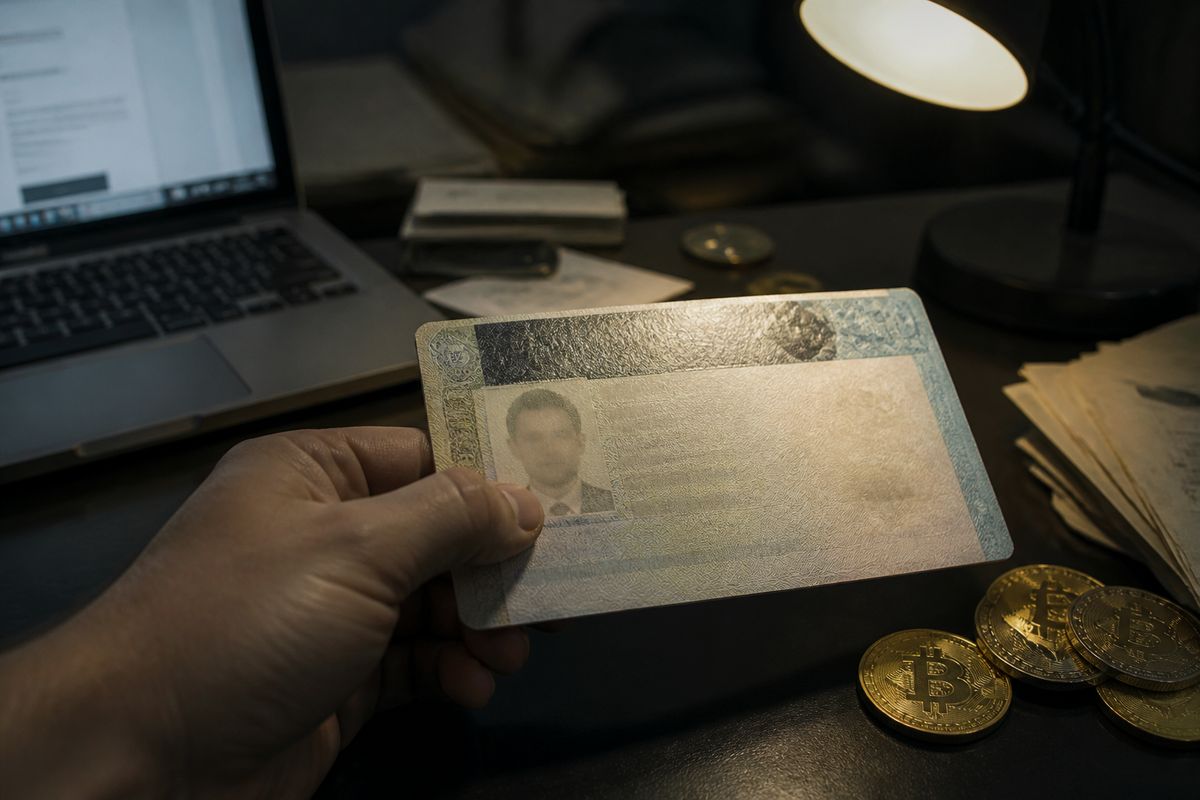
Dark web marketplaces advertise visa documents at prices ranging from €300 for EU stickers to €400 for fraudulent issuance services1, though legitimate identity documents average $1,7052. Visas represent just 3.5% of counterfeit identity listings compared to 40.1% for passports2. Using a fraudulent visa carries federal penalties up to 25 years imprisonment depending on the offense3, and biometric systems like the EU's Visa Information System cross-reference finger scans at borders4. Before engaging with any vendor, understand that 78% of suspected fraudulent documents still resulted in U.S. entry in recent audits5, yet USCIS considers fraud-obtained visas void and grounds for lifetime admission bars6.
What You Actually Receive
Physical Visa Sticker or Digital Document
Vendors typically offer EU visa stickers for approximately €300 or fraudulent visa issuance services for €400 [1]. These products represent 3.5% of counterfeit identity documents advertised on dark web marketplaces, significantly less common than passports or state IDs [2].
Escrow Protection with Known Limitations
Most transactions use escrow services where agents hold funds until delivery, earning 3% to 15% per transaction [7]. However, one documented case involved an official escrow agent failing to pay $170,000 across four deals, demonstrating that escrow does not eliminate fraud risk [7].
Document That Fails Biometric Verification
The EU Visa Information System uses finger scans to verify visa holders at Schengen Area borders, with mismatches triggering further identity checks [4]. Your biometric data will not match the purchased document, making detection highly probable during border screening.
Criminal Liability Under Federal Law
Using a fraudulent visa carries penalties of up to 10 years imprisonment for first offences, with sentences increasing to 25 years if used to facilitate terrorism [3]. Civil penalties range from $250 to $2,000 per document for first violations [8].
Lifetime Immigration Bar
USCIS policy treats visas obtained by fraud as no visa at all, making your admission unlawful and resulting in a lifetime bar from admission unless a waiver is granted [6]. This permanent consequence applies even if you later qualify for legitimate immigration.
High Detection Probability at Entry
U.S. Customs and Border Protection uses document scanners, facial comparison technology, and fingerprint systems to detect fraudulent documents [5]. A 2025 audit found that 78% of individuals with suspected fraudulent documents were still allowed entry, but all cases were documented in enforcement systems [5].
Buy Visa Options and Conditions
- Type
- EU Visa Sticker
- Price
- €300 (US$350)
- Processing Time
- U уточняйте
- Requirements
- U уточняйте
- Limitations
- U уточняйте
- Type
- Fraudulent Visa Issuance Service
- Price
- €400 (US$464)
- Processing Time
- U уточняйте
- Requirements
- U уточняйте
- Limitations
- U уточняйте
- Type
- Legitimate Identity Document
- Price
- $1,705.02
- Processing Time
- U уточняйте
- Requirements
- U уточняйте
- Limitations
- U уточняйте
- Type
- Fake Identity Document
- Price
- Lower than $1,705.02
- Processing Time
- U уточняйте
- Requirements
- U уточняйте
- Limitations
- U уточняйте
How to Obtain a Visa Through Dark Web Marketplaces
Step 1: Locate a Dark Web Marketplace
You'll need to access a dark web marketplace that lists identity documents. Visas comprise 3.5% of counterfeit identity documents advertised on these platforms, significantly less common than passports (40.1%) or state IDs (25.2%)2. Use Tor Browser to navigate to active marketplaces, and create an account with a pseudonymous username. Expect to spend 1–2 hours researching vendor reputations through forum reviews before making contact.
Step 2: Choose Between Legitimate or Counterfeit Products
Vendors typically indicate whether they're selling genuine stolen documents or fabricated copies. Legitimate identity documents average £1,350 ($1,705.02), while fake products cost significantly less2. EU visa stickers sell for approximately £260 (€300), and fraudulent visa issuance services cost around £345 (€400)1. Check vendor descriptions carefully: 53.9% of sellers claim their products are legitimate documents2, though verification is impossible before purchase.
Step 3: Arrange Payment Through Escrow
Most transactions use escrow services to reduce fraud risk. Between 2020–2022, cybercriminals posted over 1 million messages mentioning escrow on the darknet, with agents earning 3% to 15% of each transaction7. Multisig escrow systems require two of three private keys—held by you, the vendor, and the marketplace—to release Bitcoin funds9. Be aware that escrow doesn't guarantee protection: one case involved an official escrow agent failing to pay $170,000 across four deals7.
Step 4: Provide Required Information
The vendor will request personal details to create or modify the visa document. For counterfeit stickers, you'll need to supply a passport photo, full name, date of birth, and passport number. For 'legitimate' stolen visas, vendors may require biometric data to match existing records. Delivery timelines vary: digital scans arrive within 24–48 hours, while physical documents take 7–14 days depending on shipping method and customs clearance.
Step 5: Understand Detection Risks at Borders
Border authorities use multiple verification systems. The EU's Visa Information System (VIS) stores biometric data including finger scans, triggering further checks when mismatches occur4. U.S. Customs and Border Protection employs document scanners, facial comparison technology, and fingerprint systems to detect fraudulent documents5. Officers record biographic and biometric data in USEC and e3 systems, with mandatory notation of identified fraud5. A 2025 Department of Homeland Security audit found that 78% of individuals with suspected fraudulent documents were still allowed entry in 60 reviewed cases5, though this doesn't reflect typical outcomes.
Step 6: Recognise Legal Consequences
Using a fraudulent visa carries severe penalties under 18 U.S. Code § 1546: up to 10 years imprisonment for first or second offences, 15 years for subsequent offences, 20 years if facilitating drug trafficking, and 25 years if used for international terrorism3. Civil penalties under 8 U.S. Code § 1324c range from £200–£1,580 ($250–$2,000) per document for first violations, and £1,580–£3,950 ($2,000–$5,000) for repeat offenders8. USCIS policy treats visas obtained by fraud as void, resulting in a lifetime admission bar unless a waiver is granted6.
Step 7: Verify Document Quality (If Proceeding)
Inspect the physical document under UV light to check for security features like watermarks, holograms, and microprinting. Compare the visa sticker against official samples available through government websites. Check that biometric data matches your actual fingerprints and photograph, as the VIS system enables data sharing across Schengen States to combat 'visa shopping'—applying to multiple EU countries after rejection4. USCIS operates the Fraud Detection and National Security Directorate specifically to detect immigration fraud10, making professional-grade counterfeits increasingly difficult to produce.
Risks, Limitations, and Guarantees
Purchasing visa documents on dark web marketplaces involves significant risks. Using a fraudulent visa can lead to severe legal consequences, including up to 10 years in prison for first offenses under U.S. law3. Civil penalties also apply, ranging from $250 to $2,000 for first violations8.
The quality of documents varies widely. EU visa stickers are sold for around €300 (US$350)1, while legitimate identity documents average $1,705.022. This price difference raises concerns about the authenticity of the documents. Despite 53.9% of vendors claiming their products are legitimate, verifying this before purchase is often impossible2.
Escrow services are commonly used to facilitate transactions and reduce fraud risk. However, they do not guarantee protection. There have been cases where escrow agents failed to fulfill their obligations, resulting in substantial financial losses7.
Before proceeding, verify the vendor’s reputation and document quality. Be aware that a visa obtained fraudulently is considered void, resulting in a lifetime bar from admission unless a waiver is granted6. Border authorities employ biometric verification systems, making detection highly likely. Mismatches can trigger further scrutiny4. Always proceed with caution and understand the potential consequences.
FAQ
How much does a fake visa cost on the dark web?
EU visa stickers sell for approximately £260 (€300 or US$350), while fraudulent visa issuance services cost around £345 (€400 or US$464)1. Legitimate identity documents average £1,350 ($1,705.02), whereas fake products are priced significantly lower2. Prices vary based on document type, vendor reputation, and whether the product is a counterfeit or stolen genuine document.
Can you get caught buying a visa on the dark web?
Border authorities use biometric verification systems that make detection highly likely. The EU's Visa Information System cross-references finger scans at Schengen borders, triggering further checks when mismatches occur4. U.S. Customs and Border Protection employs document scanners, facial comparison technology, and fingerprint systems specifically designed to detect fraudulent documents5. USCIS operates the Fraud Detection and National Security Directorate to combat immigration fraud10.
What cryptocurrency is best for buying documents?
Multisig escrow systems on dark web marketplaces use Bitcoin with 2-of-3 multisignature transactions, requiring any two of three private keys to release funds9. Keys are held by you, the vendor, and the marketplace, preventing any single party from unilaterally moving funds. Escrow agents typically earn 3% to 15% of each transaction7, though this doesn't guarantee protection against fraud.
How long does it take to receive a purchased visa?
Digital scans typically arrive within 24–48 hours of payment confirmation, while physical documents take 7–14 days depending on shipping method and customs clearance. Delivery timelines vary based on origin and destination countries, with vendors offering options from standard post to courier services at different price tiers. You'll receive tracking information once the document is dispatched, though delays can occur without recourse.
Do dark web visa documents actually work?
Fraudulent visas lack legitimate biometric data linked to your identity, making them ineffective against modern verification systems. The EU's Visa Information System uses finger scans to verify visa holders at external borders4, while U.S. systems employ facial comparison technology and fingerprint matching5. A 2025 Department of Homeland Security audit found that 78% of individuals with suspected fraudulent documents were allowed entry in 60 cases5, though this reflects detection limitations rather than document effectiveness and doesn't represent typical outcomes.
What is escrow and how does it protect buyers?
Escrow services hold funds until you confirm receipt of the document, with agents earning 3% to 15% of each transaction7. Between 2020–2022, cybercriminals posted over 1 million messages mentioning escrow services on the darknet7. However, escrow doesn't guarantee protection: one documented case involved an official escrow agent of two shadow forums failing to pay £135,000 ($170,000) across four deals7.
How do vendors ship physical visa documents?
Vendors offer shipping methods ranging from standard post to courier services, with delivery timelines of 7–14 days depending on origin and destination countries. Physical visa stickers are typically affixed to your passport page before shipping, or sent separately with application instructions. You'll receive tracking information once dispatched, though customs clearance can cause delays or interception by authorities.
Cited sources
- The price of stolen travel documents (and how to stop being a target) | Saily
- Counterfeit Identity Documents on the Open and Dark Web - George Mason University
- 18 USC 1546: Fraud and misuse of visas, permits, and other documents
- Visa Information System - Migration and Home Affairs - European Commission
- CBP Faces Limitations Detecting and Preventing Aliens' Use of Fraudulent Documents to Enter the United States - DHS OIG
- Chapter 1 - Purpose and Background | USCIS
- Cybercriminals care about security too: how shady business is done on the dark web - Kaspersky
- 8 U.S. Code § 1324c - Penalties for document fraud | U.S. Code | US Law
- Darknet Market Escrow Explained — Multisig vs Standard | Zero Trace Hub
- Fraud Detection and National Security Directorate - USCIS
Handpicked links. A few related services may help with the next step. Tools & services